

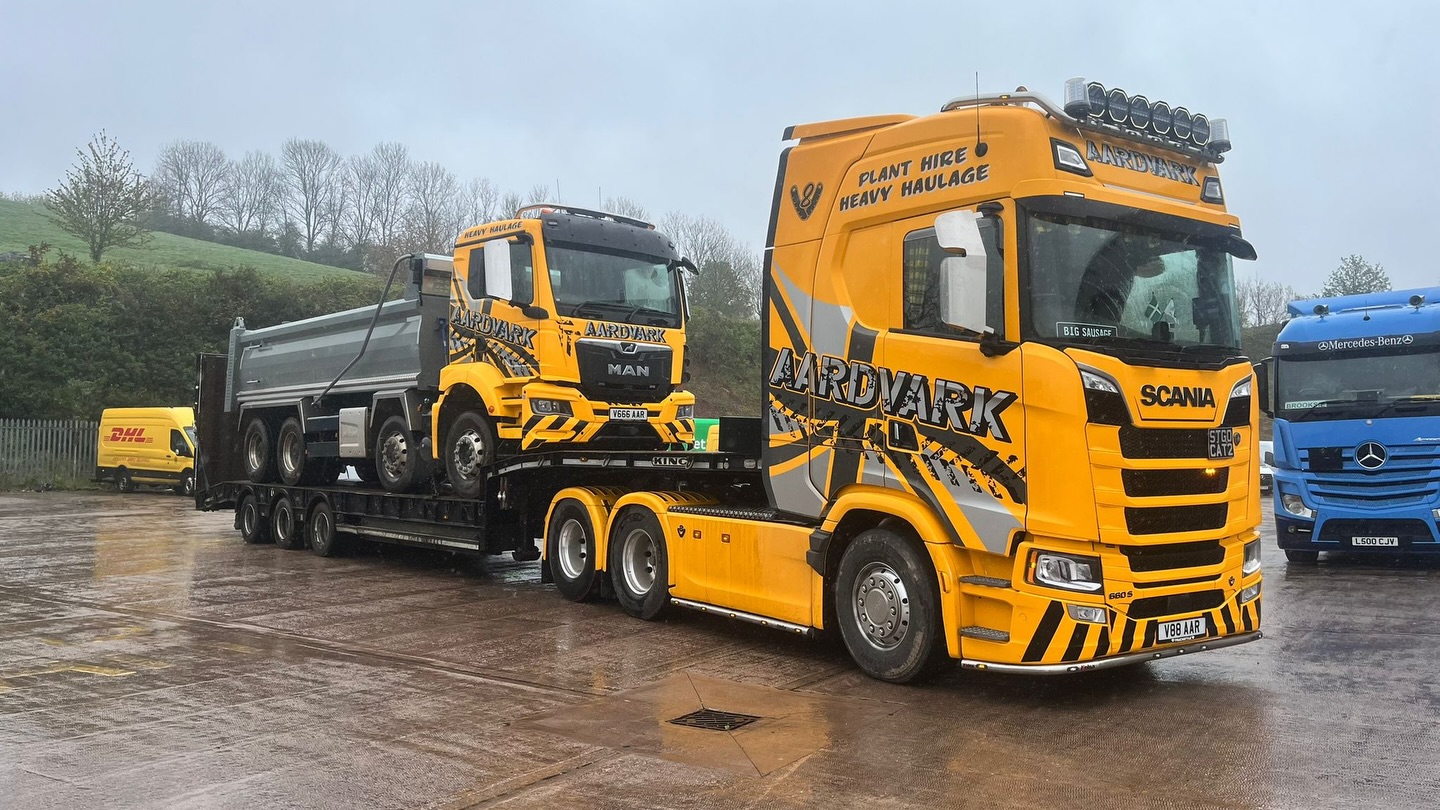
Every now and then a job comes in that reminds you why we keep the heavy haulage side of the business so well kitted out. This week one of those moments came round again — a MAN tipper that needed shifting, loaded up onto our Scania low loader and brought safely back to base.
It’s not the kind of work that grabs headlines, but HGV recovery and heavy haulage transport is one of the most important services we offer. When a commercial vehicle goes down — whether through mechanical failure, a breakdown on a job site, or simply needing to be relocated across the country — you can’t just call a regular recovery truck. You need the right kit, the right ticket, and a driver who knows how to handle the loading and securing of a vehicle that can weigh anywhere from 18 to 44 tonnes.
That’s where a properly specced low loader earns its keep. Ours runs behind a Scania 660S — a serious bit of kit that’s built for the job. The low bed height makes loading vehicles like tippers, diggers, and other plant much safer and more straightforward than trying to winch onto a standard trailer. Combined with the right ramps, chains, and strapping, it means we can recover and transport anything from a stricken HGV to a full-size 360 excavator without breaking stride.
Recovery work is one of those things that’s hard to plan for. Vehicles break down when they break down, and they don’t always do it somewhere convenient. We’ve pulled HGVs out of farm tracks, off motorway laybys, from quarries, and from yards where access is tight enough to make you sweat. The key to doing it well is having the experience to assess each situation properly — working out how to get the casualty vehicle onto the trailer safely, how to secure it for transport, and how to get it back to wherever it needs to go without causing further damage.
The same gear gets used for planned heavy haulage too. Moving plant between sites, delivering machinery to customers, relocating commercial vehicles for dealers or fleet operators — it all runs on the same low loader. That dual capability is part of what makes a properly equipped heavy haulage operation worth its weight. You’re not just paying for the truck and trailer; you’re paying for the readiness to handle whatever comes up.
There’s also the matter of compliance. Heavy haulage and HGV recovery both come with their own set of regulations — drivers’ hours, load securing standards, abnormal load notifications where relevant, insurance cover that actually pays out when something goes wrong. These aren’t optional extras. Cutting corners on any of it puts the load, the driver, and everyone else on the road at risk. Doing it properly costs more, takes longer, and is the only way it should be done.
For anyone running commercial vehicles or plant — whether you’re a haulier, a builder, a plant hire firm, or a fleet operator — it’s worth knowing who you’d call if one of your trucks went down tomorrow. The middle of a breakdown isn’t the time to start ringing round looking for someone with a low loader free. Having a relationship in place beforehand makes the whole thing a lot less painful when it does happen.
Sometimes we gotta do what we gotta do. That’s the nature of recovery and heavy haulage — you turn up, you sort it, you get the vehicle home safely. Job done.
If you want more information regarding HGV recovery, heavy haulage, or low loader transport, contact Aardvark on 01392 832124.